

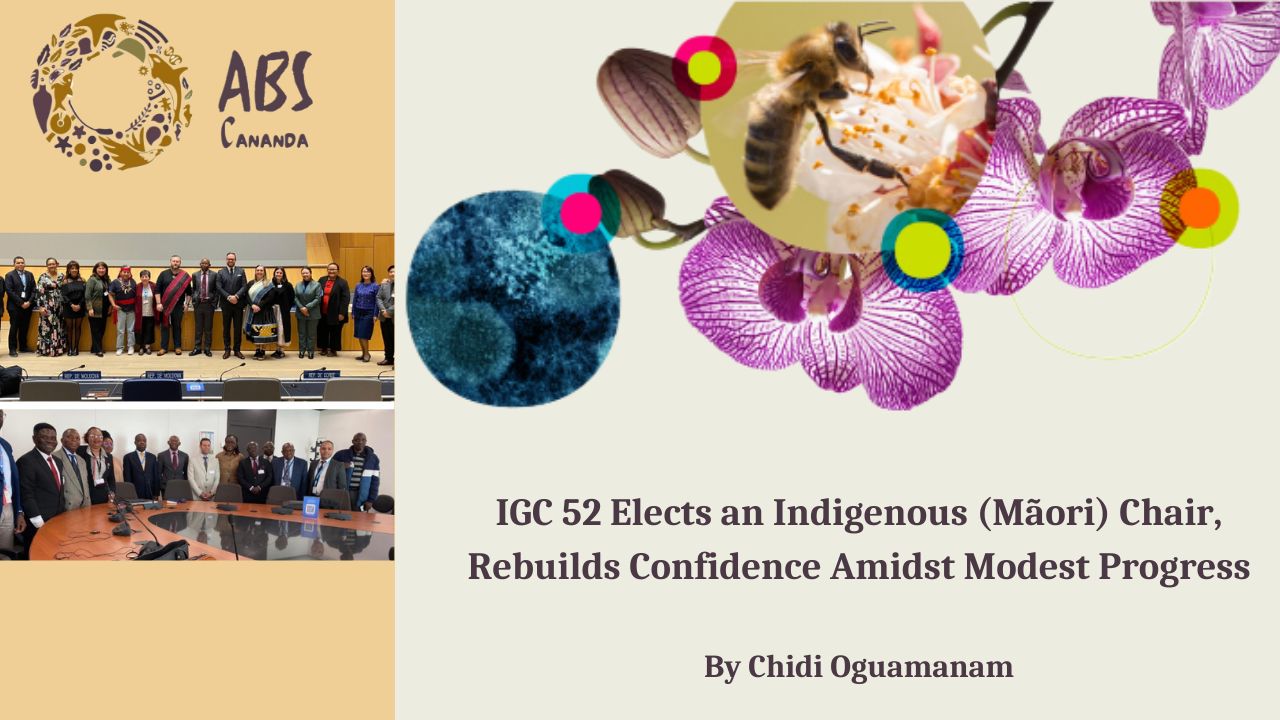
IGC 52 Elects an Indigenous (Mãori) Chair, Rebuilds Confidence Amidst Modest Progress
A New Chair and a New Traditional Knowledge (TK) Bureau
March 4-13, 2026: Delegates and experts reconvened in Geneva for the first meeting of the Intergovernmental Committee (IGC) under its renewed mandate pursuant to the 2026-7 Biennium at the 52nd IGC Sessions. The 8-Day meetings marked the start of a scaled down program of work of the special committee following the 2024 signing of the WIPO Treaty on Intellectual Property, Genetic Resources and Associated Traditional Knowledge (GR-ATK). The GR-ATK Treaty was the first ever treaty to result from the work of the IGC since it embarked on text-based negotiations in 2010.
The 52nd IGC sessions marked an important shift and transition in both the Committee’s work and the reconstitution of its facilitating Bureau at WIPO, the TK Division. The Division has a crew of new personnel. It is now headed by Philippines’ Ann Edillon, who took office following last year’s retirement of TK Division’s long-standing stable head, South Africa’s Wend Wendland. Edillon now heads the reconstituted TK Bureau under the Assistant Director General, Edward Kwakwa. In a similar vein, the 52nd sessions elected an Indigenous IGC Chair for the first time. He is New Zealand’s Laine Fisher, a Mãori, who served as a national delegate from the Ministry for Mãori Development (Te Puni Kõkiri) until now. He was elected with two Vice Chairs, Pablo Latour Talal (Chile) and Al Hanoof Al Debassi (Saudi Arabia). Fisher’s election was warmly received by delegates, especially on the heels of two previous IGCs (50 and 51) held under the old Biennium mandate following the GR-ATK treaty. Those two sessions ended in near stalemate, without an agreed text.
As the cliché goes, the new Chair and the new TK Bureau have their work cut out for them. There is an opportunity to start anew. The Chair’s obligate priority required building confidence among delegates and restoring interest in the IGC process. A lethargic mood permeated IGC following two botched sessions and frosty negotiations of the current mandate at the 51st Sessions in 2025.
Skepticism over Lopsided Agenda
Earlier at the commencement of the sessions, some demandeur delegations expressed reservations over the agenda for the 52nd sessions. In the view of demandeurs, especially the Indigenous Caucus, LMCs, and the African Group, the dedication of two full days to information sharing reflected the indulging of the non-demandeurs, who supported and ensured a reduction of the meeting days allocated to the IGC in the new Biennium. While information exchange is necessary to enable delegates to benefit from helpful experiences, demandeurs share the concern that information sharing needs to be done in balance and not at the expense of text-based negotiations. Moreover, if not carefully structured, such sessions could cloud the visibility of the Panel of Indigenous and Local Communities (held on the first day) which is now an entrenched feature of the IGC. March 6-7 were devoted to the information sessions presenting perspectives from various regions, and sectoral and varied stakeholder experiences, with the protection of TK/Traditional Cultural Expressions (TCEs) designed to prime-start the negotiations.
Truce on Methodology
A potential issue that historically dragged negotiations was the methodology adopted for the sessions. This proved the first litmus test for the new Chair. Delegates believe that the success of the sessions is partly dependent on the methodology, which is conventionally developed by the Chair in consultation with delegations and approved at the plenary. An issue had consistently frustrated delegations and contributed to two botched IGC sessions: the predisposition of non-demandeur delegations to muddy negotiating texts by engaging in binge drafting as a strategy to derail. In the accepted methodology for the 52nd IGC sessions, the Chair was able to address this knotty issue. The Chair provided important guardrail for textual drafting, which was helpful to sustain discipline through the negotiations. Also, the Chair deployed old tools of negotiation using informal sessions and contact groups to explore issues at conceptual levels and narrow them before reporting to the plenary for decision making.
Skepticism over United States’ Proposed Survey
A frosty issue at the 52nd sessions was the United States’ proposal to the WIPO to compose and disseminate a questionnaire surveying WIPO Member States experiences on the utilization of their domestically available sui generis protections for TK/TCEs. Save for United States’ usual allies (Switzerland, Canada, Korea, Japan, Britain, CEBS) and to some degree the EU, this proposal was not well received by demandeurs. For them, the proposal contains several gaps and unanswered questions. These include cost implications, the omission of the experience of Indigenous Peoples and Local Communities (IPLCs), methodological and ethical gaps, and the focus and bias of the proposal on commercial aspects of TK/TCEs. The majority of the delegates were not persuaded by what objectives such a survey would serve amidst decades of work by WIPO and several national experiences. Generally, they perceived the proposal as fraught in material details, suspect in regard to its objectives, and dubious as a matter of negotiating strategy.
Restored Confidence Amidst Modest Progress
A combination of a revived trust and a pragmatic methodology assisted delegates to make modest progress around textual improvements on working documents for the 52nd sessions in a two-track approach (TK and TCEs texts). Nonetheless, no textual proposal achieved consensus. However, the Chair promised to raise a Chair’s Note (which was a novelty of the methodology), as a non-paper, four weeks after the sessions. The Note would capture the state of textual negotiations. Progress was quite modest with no significant shift in hard fixed positions between damandeurs and non-demandeurs. Delegates resolved to continue with text-based negotiations at the 53rd sessions in September. Regarding the US’ proposal (WIPO/GRTKF/IC/52/6), the Committee decided that discussions will remain active in the next session since there was no consensus.
Eroding Confidence in the Voluntary Funding Model
Delegates appreciated Australia’s contributions to the Voluntary Fund, which supported some IPLCs’ delegations to the 52nd sessions. However, many delegates (Africa Group, LMCs, Indigenous Caucus, GRULAC, etc.) called for direct funding for Indigenous delegations to the IGC from WIPO funding rather than through the Voluntary Fund, which is cap-in-hand model of funding for the Indigenous Caucus. Delegates stressed that direct funding will justify the claim that the legitimacy of the IGC is tied to the active participation of IPLCs.
Albania (CEBS Group) Ratifies the GR – ATK Treaty
A highlight of the 52nd sessions was the announcement by Albania (Group Coordinator for CEBS) that it has submitted its instrument of ratification of the GR-ATK Treaty. This makes Albania a third State Party (in addition two African countries, Malawi and Uganda) to fully join the treaty. Albania’s ratification is significant because most countries in the CEBS Group often tend to align with non-demandeurs. Arguably, but not conclusively, Albania could be characterized as the first non-demandeur ratifier of the GR-ATK Treaty. That, however, does not undermine Albania’s unique richness and interest in TK/TCEs and its deep historic Indigenous roots.
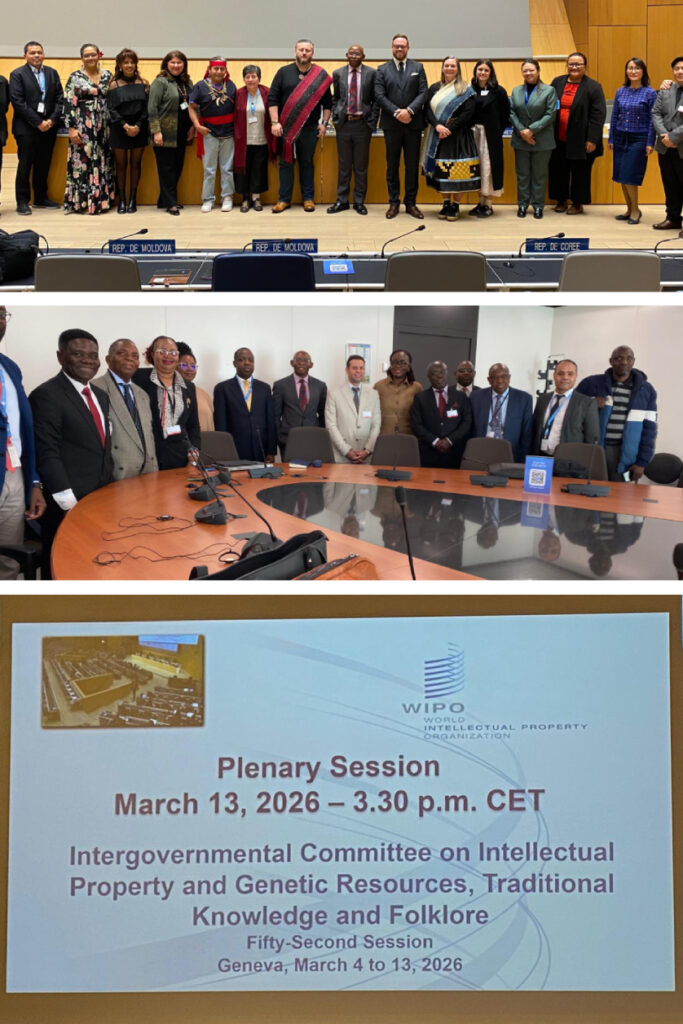
Intergovernmental Committee on Intellectual Property and Genetic Resources, Traditional Knowledge and Folklore, March 2026

Suggested citation for this blog post:
Chidi Oguamanam, “IGC 52 Elects an Indigenous (Mãori) Chair, Rebuilds Confidence Amidst Modest Progress” (May 18, 2026), online: <https://www.oguamanam.com/publications/2026-5-18/igc-52-elects-an-indigenous-mori-chair-rebuilds-confidence-amidst-modest-progress>

