


Toronto Zoo Workshop on Developing Ethical Partnerships for Conservation Cryobanking with Indigenous Communities
Overview
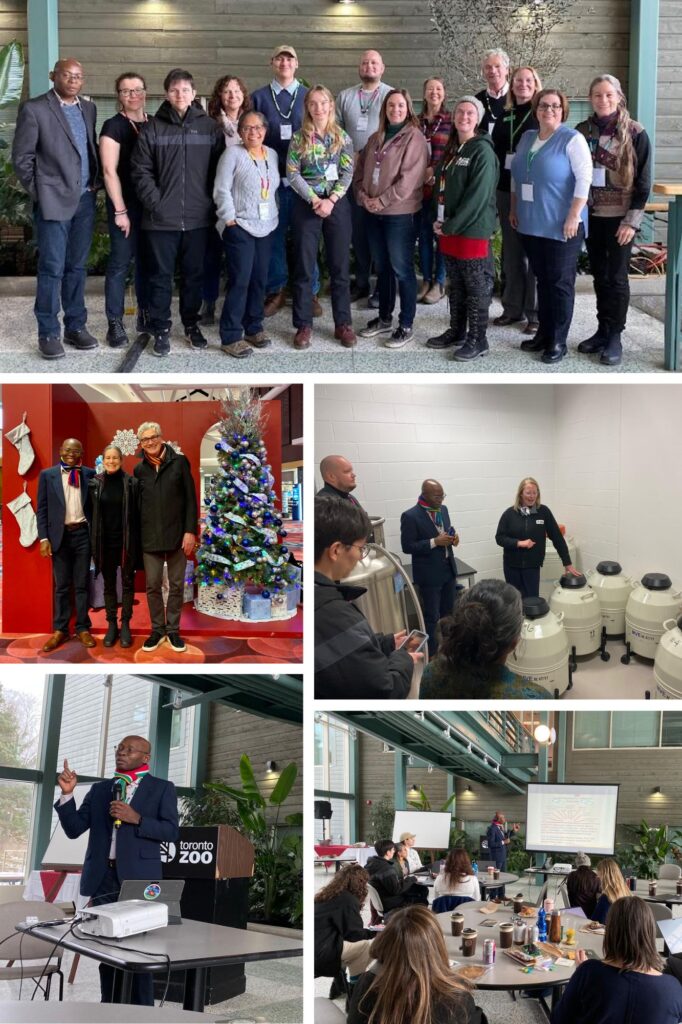
On December 2nd-4th, 2025, the Toronto Zoo hosted the Workshop on Developing Ethical Partnerships for Conservation Cryobanking with Indigenous Communities.
For 40+ years, the Toronto Zoo has been a leader in conservation biology. Its cryobank—where living cells from endangered species are preserved for future reproductive use—is a crucial resource for global biodiversity. Cryo-preservation stores cells (sperms, eggs, embryos, stem cells, ovarian and testicular tissues, etc.) of endangered animals for conceivably indefinite preservation.
Cryopreservation is the foundation of assisted reproductive technology (ART). The COVID-19 Pandemic showed how climate change has since blurred the boundary between animal and human health. Consequently, the imperative for One Health approach is no longer an option—it is the reality. Zoos serve as a critical site for purposeful contact with wildlife. Beyond the front-facing role of zoos, the other little-known role of zoos as conservation research institutions now assumes historical importance.
The Toronto Zoo is positioned as a future-facing cutting-edge research institution. It is navigating complex questions around developing framework and strategy as well as partnerships with Indigenous Peoples for this important role at the intersection of animal-human health, genetic heritage, climate action and conservation biology.
The Toronto Zoo is a leader in securing the richness of the natural world and, by extension, insurance for human-animal health and climate resilience. Enabling the zoo’s institutional role amidst complex regulatory and governance morass around genetic resources is now urgent wherein Indigenous partnership and reconciliation is critical.
Toronto Zoo Workshop on Developing Ethical Partnerships for Conservation Cryobanking with Indigenous Communities

