


68th WIPO General Assembly: Gauging the Pulse on the IGC and the GRATK Treaty
Context and Background
The 68th series of meetings of the Assemblies of Member States of WIPO (also the WIPO GA) were held from July 7 to July 15, 2026, at WIPO Headquarters in Geneva. Item 11 of the 68th WIPO GA program focused on the Reports of WIPO Committees tasked with the organization’s international normative work. Specifically, under item 11(v), the Assembly received and deliberated on the report of the Intergovernmental Committee on Intellectual Property and Genetic Resources, Traditional Knowledge and Folklore (IGC) (WO/GA/60/7) pursuant to the IGC’s 2026-27 biennium mandate.
Two years ago, precisely on May 24, 2024, the IGC unanimously adopted the Treaty on Intellectual Property, Genetic Resources and Associated Traditional Knowledge (GRATK), which is the first treaty produced by the Committee after 24 years from its inauguration in 2000. Member States’ discussions of the work of the Committee under the current mandate was an opportunity to feel their perception and to assess how individual States and regional blocs are positioning themselves regarding the future of IGC and their expectations over the GRATK Treaty. In this blog, I attempt to capture key aspects of those sentiments arising from the GA discussions on the IGC agenda item:
First, as a backdrop, the 2026-27 biennium mandate of the IGC requires the Committee to, among other things, “continue its work on the protection of genetic resources (GRs), traditional knowledge (TK) and traditional cultural expressions (TCEs), with the objective of finalizing an agreement on an international legal instrument(s), without prejudging the nature of outcome(s), relating to intellectual property, which will ensure the balanced and effective protection of TK and TCEs”. Another important part of the extant biennium mandate requires the Committee to “continue to discuss intellectual property issues concerning GRs and their interlinkage with TK and TCEs, without normative work on GRs”.
Second, in his opening remark, the WIPO Director General (DG) Daren Tang, who was hosting the last GA of his first 6-year term while gearing up for his second term (commencing in October 2026), remarked: “[t]ogether, we demonstrated that multilateralism can deliver results despite challenges, through the successful landmark conclusion of two treaties in 2024, the WIPO Treaty on IP, Genetic Resources and Associated Traditional Knowledge and the Riyadh Design Law Treaty”. In their deliberations, Member States echoed the same sentiments as the DG regarding the GRATK Treaty (and of course the Riyadh Design Law Treaty). They also dropped both direct and nuanced diplomatic hints, which collectively reflected concerns about the future of the GRATK Treaty and the IGC process.
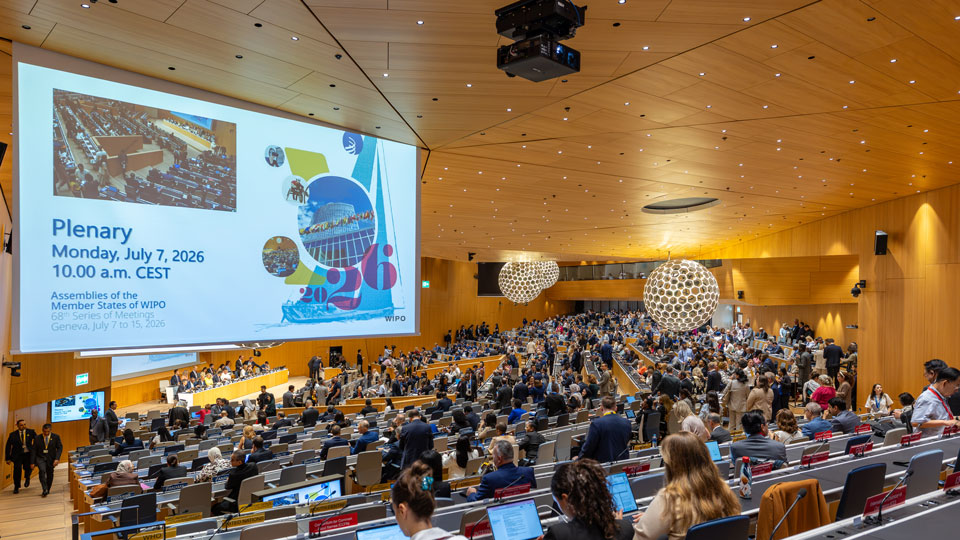
68th WIPO General Assembly, July 2026, Geneva, Switzerland
Early Ratification/Accessions to GRATK Treaty
On a reassuring note, progress remains incremental over the ratification and accession to the GRATK Treaty. As at the time of the 68th GA, four countries have populated the number of ratifications and accessions in the following order: Malawi, Uganda, Albania, and Peru. The regional diversity of these countries (Africa; Central European and Baltic States; and Group of Latin American and Caribbean countries) are notable. Along the corridors and on the sidelines of WIPO diplomatic chitchats, there are impressive, albeit unofficial, indications of preliminary and even advanced steps by several countries across regional blocs geared toward the ratification or accession process to the GRATK Treaty.
Drumming Support for the GRATK Treaty: TIP and Geneva Centre Initiatives
Even where there is no anticipated hope for early ratification, for example, regarding the United States (a staunch opponent of the treaty), stakeholders are unrelenting in creating awareness and mobilizing support for the treaty. Notably, the Implementation Project (TIP), which is a collaboration between the Native American Rights Fund and the University of Colorado School of Law committed to the promotion of the United Nations Declaration on the Rights of Indigenous Peoples has also placed GRATK on its agenda. The TIP strategically timed the release its Outcome Document based on the TIP-sponsored workshop on GRATK Treaty, held on February 27, 2026, and hosted by American Indian Law Program at University Colorado Law. Similarly, the Geneva Centre on Knowledge Governance at the Geneva Graduate Institute held a well-attended seminar supported by the South African Permanent Mission in Geneva for African Ambassador on IP and Development. At the forum which held on the heels of the 68th GA, the TIP delegations partnered with African experts in a panel where they underscored the urgent need to attain the 15 ratifications and accessions required for the GRATK to come into force. One of the outcomes of African Ambassadors’ event in Geneva was the proposal for a forum – Friends of the GRATK Treaty – to champion and expedite the coming into force of the treaty and for laying early foundations for its governing body.

World Intellectual Property Organization (WIPO) Headquarters in Geneva, Switzerland
Mixed Signals on GRATK Treaty and the Future of IGC
On a less optimistic note, however, are some of the following sentiments based on submissions of regional bodies and strategic Member States, which cast some gloomy shadow on the IGC and the GRATK Treaty. In no order they include:
- Statement of regrets, mainly from developing countries, that after the GRTAK Treaty, there is lack of momentum over the IGC negotiations on TK and TCEs;
- Related to the last, continuing quibble over the IGC work program, specifically the tendency to weaponize information sessions and introduce endless red herrings around evidence and studies as delay tactics, rather than progressing in closing gaps in text-based negotiations as required in the current mandate;
- Insistence by Group B, mostly vocalized by the United States, that IGC is the only forum for dealing with GR/TK/TCEs issues against glaring evidence on how GR/TK/TCEs remain a cross-cutting subject matter in virtually all WIPO Committees as well as in other specialized agencies of the United Nations;
- US-led opposition to exploring amendment of the Patent Cooperation Treaty as required by the GRATK Treaty to accommodate the latter’s provision on disclosure of origin and source of generic resources and, where applicable, associated traditional knowledge in patent application;
- Mixed signals regarding the number (two or one) and nature (binding or non-binding) of instruments to result from ongoing work of the IGC. While some Member States prefer a consolidated document on TK and TCEs (for example, as the African region has done pursuant to the AfCFTA IP Protocol Annex), others insist on two instruments that deal separately with each subject matter;
- Again, led by the United States, Group B countries are opposed to funding the attendance and participation of Indigenous Peoples as well as Local Communities (IPLCs) in the IGC save through the cap-in-hand Voluntary Fund model that has not served the IPLCs well. In contrast, most developing countries support funding IPLCs directly from the WIPO budget.

Daren Tang, WIPO Director General
Conclusion
According to the newly re-elected WIPO DG, the 68th Series of the Assemblies of the WIPO Member States was one for the record books, statistically, in terms of attendance, participation, and global promotion and showcase of national prevalence of intellectual property. The Assemblies were also a referendum on the DG’s impressive and transformative first tenure, one of the highlights of which was the GRATK Treaty. As we have indicated elsewhere, the Treaty is a major development-oriented treaty of the 21st century, symbolizing over century long efforts at reconsideration of colonial exclusion of Indigenous knowledge systems from intellectual property. The mixed signals from 68th WIPO GA deliberations on the future of IGC and the GRATK Treaty demonstrate that a lot more is required to genuinely reposition TK and indeed, in the words of the DG, “IP as path to prosperity, growth and development”. The GRATK opens a modest and symbolic gateway for Indigenous Peoples as well as local communities and those in the grassroots for potential integration into global knowledge governance with sensitivity to their epistemic and cultural integrity through the valorization of their contributions to innovation. A sense of the position statements of industrialized countries at the 68th GA over the GRATK Treaty and the continuing work of the IGC does not reflect the desire for genuine commitment to GR/TK/TCEs across WIPO’s committee and international normative work. Currently at WIPO, normative work on TK run mainly on two major but related tracks. First is the ratification/accession to GRATK Treaty, which remains incremental with no strong interest yet among industrialized countries. The second is the resumption of IGC negotiations in the fall of 2026. Both tracks clearly portend trepidation over the GRATK Treaty and the IGC even among avowed optimists.

Suggested citation for this blog post:
Chidi Oguamanam, “68th WIPO General Assembly: Gauging the Pulse on the IGC and the GRATK Treaty” (July 28, 2026), online: <https://abs-canada.org/68th-wipo-general-assembly-gauging-the-pulse-on-the-igc-and-the-gratk-treaty/>

