


IGC 53: Delegates Bicker Over Balance Between Text-Based Negotiation and Evidence-Based Approach
Delegates to the 53rd sessions of the World Intellectual Property Organization’s (WIPO) Intergovernmental Committee on Intellectual Property, Genetic Resources, Traditional Knowledge and Folklore (IGC) have concluded the penultimate negotiations under the Committee’s 2026-2027 mandate in Geneva. The negotiations started on Wednesday, September 16th, and concluded on Friday, September 25th. An Indigenous Panel preceded the negotiations. We can expect the report from the Indigenous Panel at the next meeting of the IGC.
Evidence-Based Approach and Information Sharing Debate
Not surprisingly, the 53rd IGC Sessions were characterized by a quest to strike a delicate balance between the Committee’s core mandate of text-based negotiations and its commitment to an evidence-based approach to its work. Negotiations reflected a clear tension between demandeurs (mainly but not exclusively developing countries and the Indigenous Caucus) and non-demandeurs (mainly industrialized countries). The two groups held different positions regarding the interpretation of an evidence-based approach. While the former group of demandeur stakeholders are not opposed to an evidence-based approach, they insisted that such an approach should not “delay progress or establish any preconditions for negotiations,” pursuant to the Committee’s mandate. The non-demandeur industrialized countries put more emphasis on the evidence-based approach over text-based negotiations. They continue to push for the “information sharing” agenda in the IGC program. Among others, information sharing aims to showcase elements of an evidence-based approach. Information sharing animates the mandate’s reference to “studies or additional activities” on a range of empirical issues relating to Traditional Knowledge (TK)/Traditional Cultural Expressions (TCEs) subject matters across national/regional sui generis regimes on the protection of TK/TCEs.
On the basis of their interpretation of an evidence-based approach, the 53rd IGC delegates dedicated half a day to an information-sharing session. A three-member panel constituted this session: Jane Anderson (Local Context, New York University’s Law School), Tara Gujadhur (Traditional Arts and Ethnology Centre, Laos) and Adrienne Regine S. Dunuan (National Commission on Indigenous Peoples, Philippines). Each person shared insightful details of processes and experiences aimed at protection of TK/TCEs, highlighting collaborations across communities, institutions and various applications of technologies.
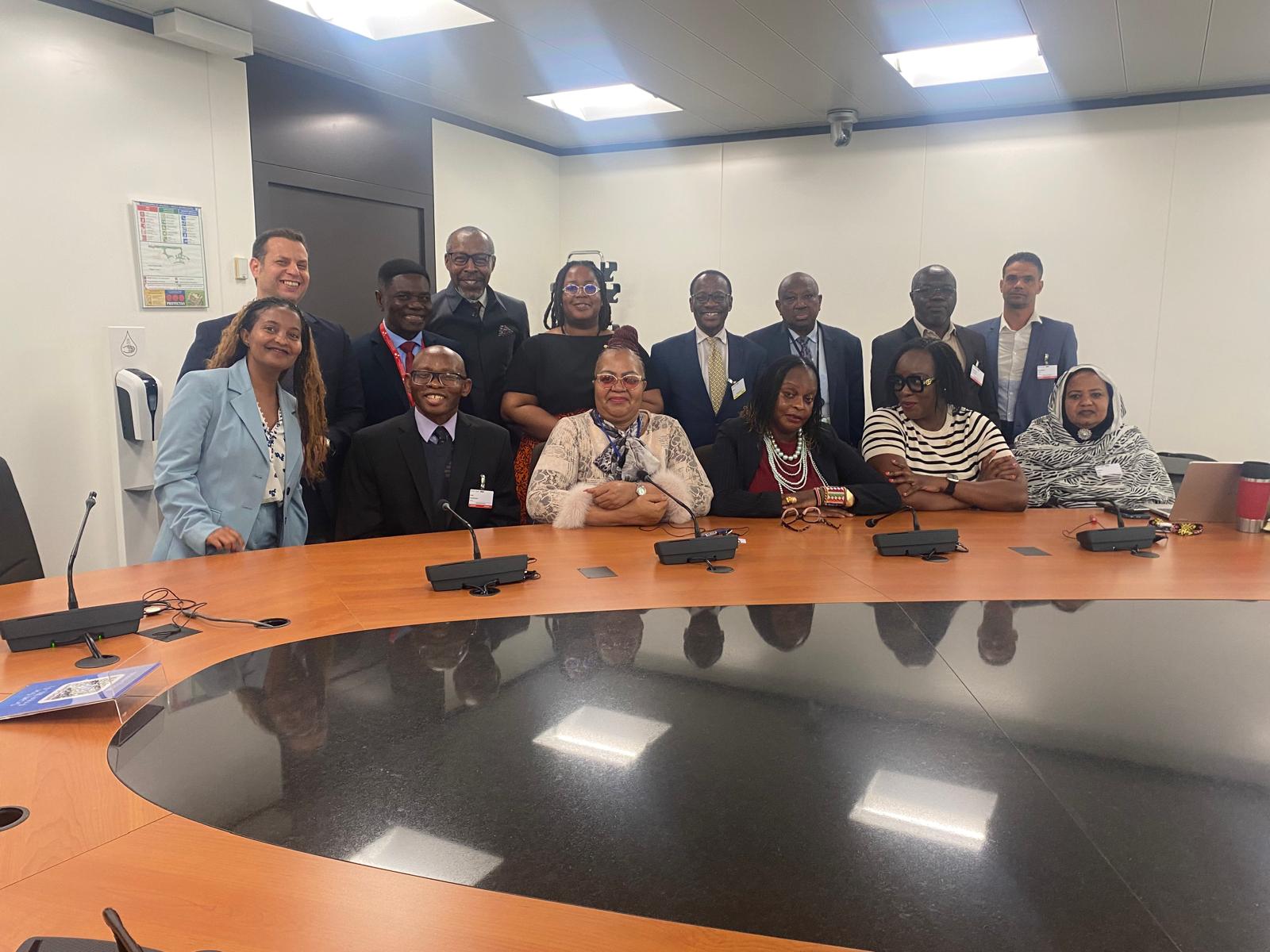
African Group, Indigenous Caucus at IGC 53.
WIPO Sui Generis Data
An important supplement to the evidence-based approach under the mandate is the long-standing IGC mandate enjoining the WIPO Secretariat “to continue to collect, compile and make available online information on national and regional sui generis regimes for intellectual property protection of TK/TCEs”. It is noteworthy that the Secretariat had been implementing this mandate in the past. At IGC 53, the Secretariat released an updated version as of August 2026 (Compilation of information on National and Regional Sui Generis Regimes for the Intellectual Property Protection of Traditional Knowledge and Traditional Cultural Expressions), which remains at the disposal of delegations.
United States Proposed Survey
One of the major features of the 53rd IGC negotiations was a subject matter outside of text-based negotiations. It relates to a specific proposal: Proposal by the Delegation of the United States of America for a Questionnaire on the Use of Sui Generis Protections for Traditional Knowledge and Traditional Cultural Expressions, a Summary Report of Responses Received, and Presentation of Results. Delegates discussed this proposal previously at the 52nd IGC. Ultimately, IGC 52 decided to keep the proposal under continuing discussions, based on reservations expressed by several delegations over the survey’s structure, feasibility, purpose, resource implication, and perceived duplicative nature in relation to the work of the Secretariat, the output of the information sharing sessions, and the Indigenous Panel. In re-tabling a revised proposal for a survey at IGC 53, the United States delegation argued that:
“[t]he questionnaire seeks information on how governmental sui generis systems for TK and TCE protection have operated in practice, based on information tracked at the governmental level within Member States. The questionnaire is voluntary, seeks the summary reporting of information already available to Member States, and does not require or expect Member States to undertake new data collection efforts to participate”.
Not all delegations were persuaded at IGC 53 on the merit of the proposed survey. Its late circulation was not the only issue. Delegates resolved to defer further scrutiny of the proposed survey until the next IGC session.

WIPO Headquarters in Geneva, Switzerland.
IGC Chair without Vice Chairs
Another feature of the 53rd IGC was the glaring lack of human resources support for the Chair (Laine Fisher, NZ). The IGC Chair was saddled with a situation where he had to oversee intense programs and the often fraught, unpredictable dynamics of the negotiations, without the benefit of his two vice Chairs (Saudi Arabia and Chile). The erstwhile Chilean Vice Chair was not available for IGC 53, while the other Vice Chair has been absent from two consecutive IGCs (52 and 53). Due to personal preference, the Chair had, upon his election, declined to appoint facilitators or even Friends of the Chair. In the absence of his two Vice Chairs, having Friends of the Chair would have been handy. The absence of these aids created a situation wherein the IGC Chair shouldered the majority of the burdens, while the TK Division was unfailing in providing support as required within the parameters of the Secretariat’s role.
Text-based Negotiations on Objectives and Beneficiaries
Despite challenges, the Chair led the delegation onto some modest but significant progress in text-based negotiations. Unlike the previous IGCs, the Chair’s principled method required him to hold the pen on the text. This strategy of retaining control of the drafting process curtailed delegates’ proclivity for binge drafting – a practice which resulted in widening gaps and deviation from the core mandate of narrowing gaps. On this substantive issue of text-based negotiation, delegations deliberated on two major texts: Objective and Beneficiary. They succeeded in agreeing on working texts and language for both, reflecting some improvement on the previous negotiation document from IGC 53. Delegates resolved to forward those to the March 2027 IGC 54, which will mark the end of the biennium. IGC 54 presents another opportunity for the delegations to negotiate the Committee’s mandate renewal for the next biennium (2027-28). To their joint credit, the Chair, delegations and the TK division, IGC 53 concluded smoothly without the usual fraught tendencies regarding agreement on final decisions.
On Genetic Resources and the Coming into Force of the GRATK Treaty
In compliance with its mandate to “continue to discuss intellectual property issues concerning GRs [genetic resources] and their interlinkage with TK and TCEs, without normative work on GRs,” delegates emphasized that the relationship between genetic resources and TK and TCEs remains integrated and holistic. Some maintain that normative work on genetic resources should be frozen to the extent that such matters are already dealt with by the WIPO Treaty on Intellectual Property, Genetic Resources and Associated Traditional Knowledge (GRATK Treaty). These same voices noted that the GRATK Treaty is narrowly focused on the patent system. Others remarked that the committee remains active and undissolved, hence, it must assume its jurisdiction over genetic resources.
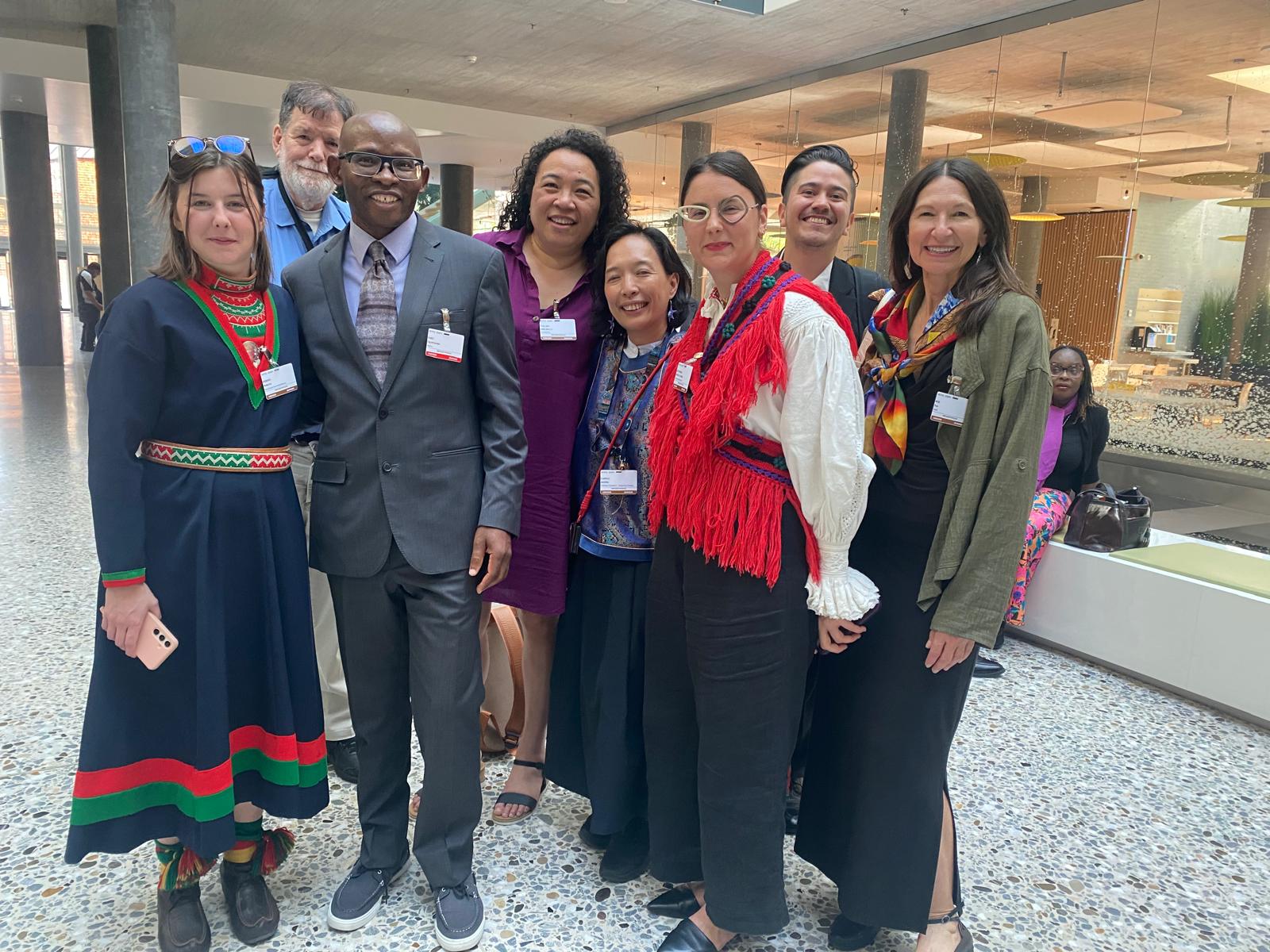
African Group, Indigenous Caucus at IGC 53.
IGC 53 was an opportunity for delegates in their various remarks to celebrate the significance of the GRATK Treaty. They emphasized the need for the Treaty to come into force urgently. In that regard, On September 17th, the Islamic Republic of Iran seized the opportunity of its exhibition on “Persian Heritage and Future Innovation” to host a panel in collaboration with the South Centre titled, “From Adoption to Entry into Force: Advancing Ratification and Effective Implementation of the GRATK Treaty”.
At a September 21st side event, Nigeria, along with 11 foundational members, unveiled a GRATK Treaty Champion Core Group dedicated to expedited attainment of the remaining 11 Ratifications/accessions for the Treaty to come into force. The launch of the GRATK Treaty Core Champion Group on the “Road to 15” was well received cross-regionally, with the attendance of critical member states from both demandeur and non-demandeur countries. They emphasized the need for cross-regional balance in the ratification of the Treaty and the urgency for the treaty to come into force. The Champion initiative promises to develop model implementation legislation, and ratification took kit courtesy of technical collaboration with the Geneva Centre on Knowledge Governance.
Concluding Observations and Take-Aways
Two matters dominated the IGC 53 discussions: contestation over delegates’ partisan interpretations and the potential scope of an evidence-based approach. In terms of the latter, delegates discussed how an evidence-based approach can be leveraged without undermining text-based negotiations. That is the context for understanding the endless debate over the US-proposed survey and the nature and operative detail of the information-sharing session. The irony is that the question of an evidence-based approach marginalized the Committee’s productivity regarding its core mandate on text-based negotiations and consequently undermined the Committee’s mandate. Delegates across regional groups used the 53rd sessions to ‘scent their grounds’ on issues that will determine the negotiation of the next mandate of IGC, where the question of the right balance between text-based negotiations and evidence-based approach may be active. Finally, as with the quest for elusive balance, IGC continues to struggle with the huge legitimacy deficit arising from cap-in-hand model of funding Indigenous Peoples and Local Communities’ participation from the perennially depleted voluntary fund.

Suggested citation for this blog post:
Chidi Oguamanam, “IGC 53: Delegates Bicker Over Balance Between Text-Based Negotiation and Evidence-Based Approach” (October 1, 2026), online: <https://abs-canada.org/delegates-debate-at-wipo-igc-53>

